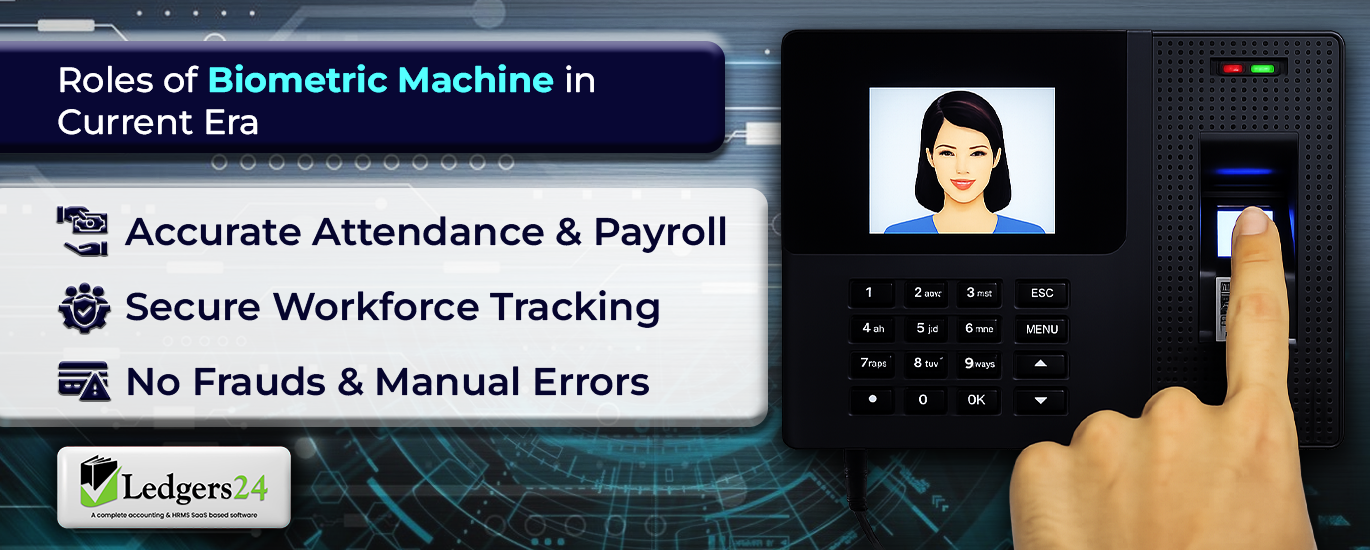
Long time ago, offices ran on paper registers, punch card and manual attendance sheets. HR team used to spent hours verifying entries, correcting errors and managing it all. But today we have BIOMETRIC MACHINES integrated with HRMS that have completely transformed how organizations manage people, time and trust.
History: How Attendance & Workforce Management evolved:
The early days: Manual Systems
In beginnings, attendance was marked manually:
- Paper Registers
- Sign-in Sheets
- Supervisor approvals
These systems were:
- Time consuming
- Error prone
- Easy to manipulate
The Shift to Digital: Cards and PINs
As office digitized, swipe card and PIN-based systems were introduced.
They improved speed but still had flaws:
- Cards could be shared or lost.
- PINs could be forgotten or misused.
- Punching for others is common.
Rise of BIOMETRIC MACHINES in modern HRMS.
This was the time when BIOMETRIC MACHINES changed the game. Biometrics use unique human characteristics like fingerprints, facial recognition or iris scan that makes identity verification accurate and secure.
Role of Biometric Machines in HRMS Today:
- Accurate Attendance Management
- Employee mark attendance themselves.
- No proxy or fake entries.
- Real time attendance data sync.
- Seamless Payroll Processing
- Work hours are calculated automatically.
- Overtime and late entries are accurately tracked.
- Payroll errors are reduced significantly.
- Leave and Shift Management
- Track shift timings.
- Manage late arrivals and early exits.
- Auto adjust leave balances.
- Stronger Workplace Security
- Biometric machines also act as access control systems.
- Track shift timings.
- Manage late arrivals and early exits.
- Auto adjust leave balances.
Why Biometric Machines are essential for Modern Business.
As we all know today’s competitive environment needs accuracy, speed and accountability.
Key benefits:
- No attendance frauds.
- Saves HR time and efforts.
- Improves employee trust.
- Scales easily with growing teams.
Addressing Privacy and Compliance Concerns:
Modern biometric systems are designed with data security and compliance in mind.
- Encrypted biometric data.
- Secure cloud or on-premises storage.
- Compliance with labor and data protection laws.
The Present & Future:
- Touchless Facial Recognition.
- AI-Powered attendance insights.
- Mobile and cloud based HRMS integration.
Conclusion
In today’s evolving workplace, biometric machines have moved far beyond being just attendance tools they have become a trusted part of modern HRMS ecosystems. From no manual errors and attendance fraud to supporting fair payroll and stronger workplace security, biometric technology helps organizations manage people with accuracy and confidence. More importantly, it allows HR teams to shift their focus from routine administrative tasks to what truly matters – employee experience, engagement, and growth. As businesses continue to embrace digital transformation, biometric-enabled HRMS solutions stand as a bridge between technology and trust, ensuring that time, effort, and people are valued in the most transparent and human way possible.